
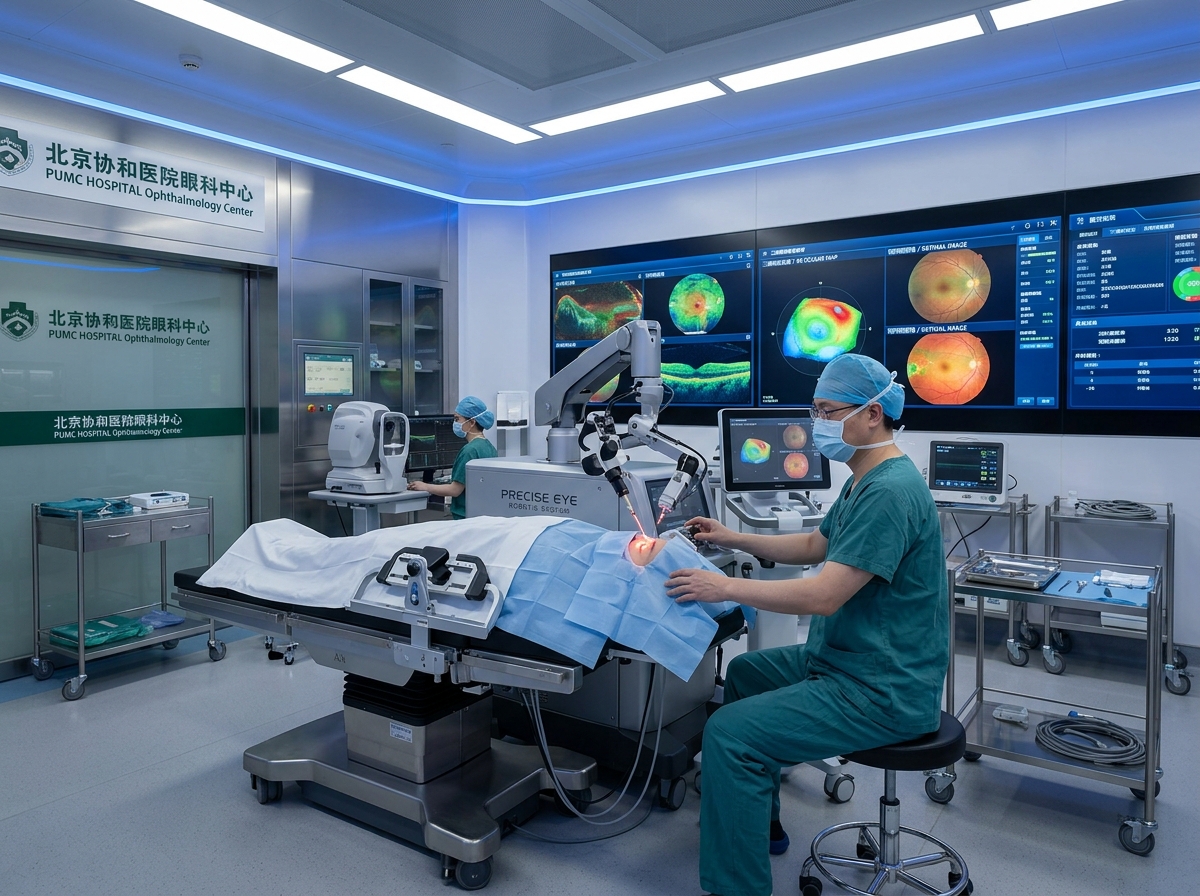
China is home to some of the busiest and most advanced eye hospitals in the world, performing millions of vision correction and cataract procedures every year. With cutting-edge laser technology, internationally trained ophthalmologists, and costs 30–70% lower than the West, China has become a leading destination for eye care. Whether you want freedom from glasses, treatment for cataracts, or care for a more complex eye condition, SinoMed Assist connects you with China's top eye hospitals and supports you at every step — from your first consultation to your final follow-up.
Get a Free Eye Care Assessment Within 24 Hours →China's leading eye centers perform an enormous number of procedures each year. Volume matters in eye surgery: surgeons who perform thousands of procedures annually achieve outstanding precision and consistency. This depth of experience is difficult to match anywhere else.
China's top eye hospitals use current-generation equipment — including the platforms used in the world's best refractive centers for SMILE, LASIK, and ICL procedures. You are treated with the same technology available in leading Western clinics, not older-generation equipment.
Laser vision correction and cataract surgery in China cost a fraction of what you would pay in the US, UK, or Australia — without compromising on technology, surgeon experience, or safety.
Many of China's senior eye surgeons have completed additional training or research fellowships in the US, Europe, or Japan, and publish in leading international ophthalmology journals. You have access to specialists who practise to international standards.
While patients in public health systems can wait months for eye surgery, first consultations at China's top eye hospitals are typically available within 3–7 days of arrival.
Your SinoMed Assist personal care manager accompanies you to every appointment, providing real-time translation throughout your consultations, surgery, and follow-up visits.
Indicative Cost Ranges (Procedure, Pre-Op Exams & Basic Follow-Up)
Final pricing depends on the procedure, technology, and lens type selected. Contact us for a written estimate.
| Procedure | USA | UK | Australia | China |
|---|---|---|---|---|
| SMILE laser vision correction | $4,000–5,000 | £4,000–5,000 | A$5,000–6,500 | $2,100–3,500 |
| LASIK (both eyes) | $4,000–6,000 | £3,500–5,000 | A$4,500–6,000 | $1,400–2,500 |
| ICL implantable lens | $8,000–12,000 | £6,000–9,000 | A$8,000–12,000 | $4,200–6,300 |
| Cataract surgery (per eye) | $4,000–7,000 | £3,000–5,000 | A$3,500–6,000 | $800–2,500 |
| Wait time (first appointment) | 2–6 weeks | 8–18 weeks NHS | 3–8 weeks | 3–7 days |
China costs are all-in procedure estimates at our partner hospitals. Premium intraocular lenses (multifocal, toric) carry additional cost. SinoMed Assist provides a full estimate after reviewing your prescription and eye records.
By coupling state-of-the-art SMILE laser systems and premium intraocular lenses with surgeons who perform thousands of procedures per year, our partner clinics deliver Western-standard vision care at a fraction of the price.
Request Free Estimate →Small Incision Lenticule Extraction: A minimally invasive, flap-free laser procedure that corrects myopia (short-sightedness) and astigmatism through a tiny incision. Preserves more corneal stability than LASIK and offers a quick, comfortable recovery. Each eye takes only a few minutes.
The most widely known vision correction procedure. A femtosecond laser creates a thin corneal flap, then an excimer laser reshapes the cornea. Fast, precise, and effective for a wide range of prescriptions. Around 10–15 minutes per eye.
A specialised lens implanted inside the eye — ideal for patients with high myopia (up to -18D) or corneas too thin for laser surgery. Provides permanent, high-quality vision correction without removing corneal tissue.
For patients over 40 experiencing age-related near-vision loss, lens-based procedures and refractive lens exchange can restore a fuller range of vision, reducing dependence on reading glasses.
Cataracts — the clouding of the eye's natural lens — are the world's leading cause of treatable vision loss. Modern cataract surgery removes the cloudy natural lens and replaces it with a clear artificial intraocular lens (IOL).
The most common technique, phacoemulsification, uses ultrasound to gently break up and remove the cataract through a tiny incision. The procedure is quick, and most patients notice a dramatic improvement in clarity within one to two days. China's top eye hospitals perform it to the highest international standards.
Anaesthesia for all laser procedures is simple numbing eye drops — no injections. Patients remain awake and feel only mild pressure. Most people resume normal activities within a few days.
Beyond vision correction and cataracts, our partner hospitals cover the full spectrum of ophthalmology care.
Not sure which treatment you need? Send us your eye records and we will match you to the right specialist.
From your first message to your final follow-up, one bilingual personal care manager handles everything.
Send us your current prescription, any recent eye exam results, and a description of your goals or condition. Our team reviews everything within 24 hours.
We match you to the right eye surgeon and hospital. A remote consultation can be arranged before you travel, and your suitability is assessed carefully — Chinese eye hospitals are known for strict, safety-first screening.
You receive a written plan with the recommended procedure, lens or technology options, cost estimate, and timeline — in plain English. No commitment required.
We arrange your hospital invitation letter for the medical visa, accommodation near the hospital, and detailed pre-operative eye measurements on arrival to confirm your final treatment plan.
Your care manager is with you on surgery day and at every follow-up. Before you leave, we prepare a full records package so your eye doctor at home can manage your ongoing care.
This depends on your procedure:
Important: Flying After Eye Surgery
After laser eye surgery, it is generally advised not to fly for 2–3 days, as changes in cabin air pressure can affect healing. We plan your travel dates around this. Your surgeon will confirm when you are safe to fly before you depart.
Am I a Suitable Candidate?
Chinese eye hospitals are known for strict, conservative screening — which is a good thing. For laser surgery, your corneal thickness, prescription stability, and eye health all need to meet safety thresholds. Some patients are advised that ICL is safer than LASIK for their eyes, or that they are not suitable for surgery at all. We would always rather give you an honest assessment than proceed with an unsafe procedure.
Aftercare at Home
Before you leave China, we prepare a complete bilingual records package — including your operative report, lens details (for cataract surgery), and post-operative care instructions — so any ophthalmologist at home can manage your follow-up care. Strictly following aftercare instructions is essential.
No. The procedure is performed with numbing eye drops — no injections. You remain awake and feel only mild pressure during the laser application. The procedure itself takes only a few minutes per eye, and most patients are surprised by how quick and comfortable it is.
For laser vision correction, many patients notice clearer vision within a day, with continued improvement over the following days and weeks. For cataract surgery, most patients notice a dramatic improvement in clarity within one to two days, though full adaptation to premium lenses can take several weeks.
Suitability depends on your prescription, corneal thickness, and overall eye health. We arrange a proper assessment — often starting with a remote review of your records, followed by detailed measurements on arrival. Our partner hospitals apply strict safety standards and will only proceed if surgery is safe for your eyes.
Many patients who are not suitable for LASIK — for example, those with thin corneas or high myopia — are excellent candidates for ICL (implantable lens) surgery instead. Your surgeon will recommend the safest and most effective option for your specific eyes.
Yes. We prepare a complete bilingual records package including your operative report, lens details, and aftercare protocol. Any reputable ophthalmologist at home can manage your post-operative care using these documents.
Most patients travel on a medical (M) visa or a tourist visa depending on the length of stay. We provide an official hospital invitation letter to support your visa application and guide you through the process.
Send us your prescription or eye records and within 24 hours you will receive an honest assessment of your options, a recommended procedure, and an indicative cost.
Medical Disclaimer: SinoMed Assist is a medical facilitation and patient support company. We do not provide medical advice, diagnoses, or treatment decisions. All treatment decisions are made by qualified ophthalmologists at our partner hospitals. Individual outcomes vary. Not all patients are suitable candidates for laser vision correction — suitability is determined by specialist assessment.